




loading count
loading pagination
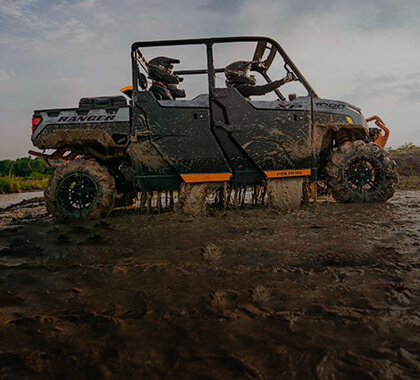
Increase the safety and style of your Polaris Ranger with a high-quality bumper and/or brush guard. These popular aftermarket modifications are designed to withstand serious abuse and can last for several decades. Choose from our selection of heavy-duty Polaris Ranger rear bumpers, upper and lower brush guards, front bumpers, and rear tube bumpers to keep your vehicle safe and attractive, no matter where you take it. We stock only the very finest and most popular models, such as the Polaris Ranger XP 1000, XP 1000, 570 (Round Bars) and Kinetic. Don't compromise on the quality of your Polaris Ranger's protection. Browse our range and order now!
A bumper on a full-size Polaris Ranger isn't a cosmetic upgrade — it's the line between a $200 trail repair and a $3,000 radiator job. After fitting bumpers and brush guards to full-size Rangers for over a decade out of Appleton, Wisconsin, we've learned that most buying mistakes come from three places: picking the wrong material for the use case, missing a fitment generation gap, and assuming a bumper is "winch-ready" when it isn't. Here's what to know before you click buy.
Nearly every quality full-size Ranger bumper on the market is built from one of two materials: tubular or laser-cut steel, or aluminum. Carbon fiber sometimes gets mentioned in generic UTV write-ups, but it isn't a real category here — the impact profile is wrong for it.
Steel is the workhorse. A typical winch-ready steel front bumper on an XP 1000 runs 35–50 lbs, mounts to the frame, and shrugs off the kind of low-speed tree contact that bends thinner products. The tradeoffs are weight (which affects front-end ride and tire wear on lifted builds) and rust if the powder coat is scratched and ignored. Brands worth knowing in steel: SuperATV, Wild Boar, Rival, Thumper Fab, HMF, DRT, Rough Country, and Kemimoto.
Aluminum cuts weight roughly in half. It's the right call if you're running a lift kit and oversized tires, building a hunting rig where every pound counts against payload, or if your Ranger lives where salted winter roads are part of life. Aluminum dents rather than bends, which is sometimes a feature and sometimes a bug.
The real question isn't "which is better" — it's "what's your use case." A working farm Ranger pulling a feeder and pushing snow is a steel build. A trail or hunting XP 1000 that gets washed and stored indoors is a fine candidate for aluminum.
The three terms get used loosely. Here's how to actually differentiate them.
A bumper is a structural protection piece that mounts to the frame and absorbs impact — rock strikes, low-speed collisions, that one fence post you forgot was there. Front bumpers protect the radiator, headlights, and lower A-arms. Rear bumpers protect the bed corners and rear suspension, and often double as an upgraded hitch.
A brush guard is lighter-duty and protects against trail brush, branches, and brush-induced cosmetic damage. Upper brush guards extend above the hood to protect the windshield and roof line; lower brush guards (sometimes called grille guards) protect the front clip. Most XP 1000 owners running real trails want at least an upper brush guard on top of a stock or aftermarket bumper.
A winch-ready front bumper is a front bumper with a built-in mounting plate, fairlead cutout, and (usually) wiring pass-through for a winch. The "ready" part is doing a lot of work in marketing copy — some winch-ready bumpers fit any standard winch, some only fit specific footprints. Always confirm the bumper's mounting pattern matches your winch (or planned winch) before ordering.
This is the section that saves the most returns.
Polaris Ranger XP 1000 (2017–2023): Most XP 1000 bumpers from this generation are cross-compatible across model years. A 2018 winch-ready front fits a 2022 XP 1000. The exception is the 2017 model year, which has a few mounting differences on some kits — check the product's fitment chart.
Polaris Ranger XP 1000 (2024+): Polaris updated the chassis and front clip in 2024. Older XP 1000 bumpers do not fit — this is the single most common return we see. If you've got a 2024 or 2025 XP 1000, you need a bumper explicitly listed for that year range.
Polaris Ranger 1000 (2020–2024): The non-XP Ranger 1000 sits on a different platform than the XP 1000. Bumpers are not interchangeable between the two, even though both are full-size three-seaters. Manufacturers list these separately for a reason.
Polaris Ranger XP 570 / 570 Full-Size: The full-size 570 (older platform) and the XP 570 share fitment with parts of the Ranger 800 and XP 900 lineup. If your Ranger is a full-size 570, check whether the bumper is listed for XP 900 / XP 1000 (2014–2017) compatibility — many fit. The mid-size SP 570 is a different vehicle entirely and uses a different bumper.
When in doubt, call or text 920-644-5280. We'd rather spend five minutes confirming fitment than process a return.
Most full-size Ranger front bumpers install in 60–90 minutes with hand tools — socket set, torque wrench, sometimes a hex or Torx set. The stock bumper or front fascia comes off first, the new bumper mounts to the frame using OEM bolt locations plus any included brackets, and (if it's winch-ready) the winch installs into the bumper before the bumper goes on the vehicle.
A few things that catch first-timers: some kits don't include hardware (read the product description); rear bumpers on Crew models can interfere with the hitch crossmember if you tow; and if you're running a stock plastic skid plate and adding a winch-ready bumper, you'll usually want a metal skid plate at the same time.
Will a Polaris Ranger XP 1000 bumper fit a Ranger 1000? No. Despite both being full-size three-seat Rangers, the XP 1000 and Ranger 1000 use different chassis and front-clip mounting. Bumpers are not cross-compatible. Order based on the exact model badge on your vehicle.
Will a 2018–2023 XP 1000 bumper fit a 2024+ XP 1000? No. Polaris updated the XP 1000 chassis and front fascia in 2024. Older bumpers do not fit. Look for products specifically listed as fitting 2024 and newer XP 1000.
Do aftermarket bumpers void my Polaris warranty? No. Under the federal Magnuson-Moss Warranty Act, installing an aftermarket bumper does not void your overall Polaris warranty. Polaris can only deny coverage on a specific component the bumper directly caused to fail — for example, if an improperly installed bumper damaged a wiring harness. The engine, transmission, suspension, and other unaffected systems remain covered.
Do I need a winch-ready bumper if I don't own a winch yet? If there's any chance you'll add a winch in the next few years, yes — buy the winch-ready bumper now. Retrofitting a winch onto a non-winch bumper isn't possible on most products, and the price difference is usually under $100. A winch-ready bumper with no winch installed looks identical from the outside.
What size winch fits a Polaris Ranger full-size? Standard winch sizes for full-size Rangers are 3,500 lb, 4,500 lb, and 5,000 lb. Most XP 1000 and Ranger 1000 owners run a 4,500 lb winch — enough capacity for self-recovery in mud or snow plus pulling other rigs out, without overloading the front end. If you plow snow or recover heavier loads regularly, step up to 5,000 lb. Always confirm your bumper's winch plate accepts the footprint of your chosen winch.
How long does it take to install a Polaris Ranger bumper? Plan on 60–90 minutes for a front bumper and 30–60 minutes for a rear, working alone with basic hand tools. Add 30–45 minutes if you're installing a winch at the same time. The most time-consuming step is usually removing the OEM front fascia, not mounting the new bumper.
Steel or aluminum — which is better for a Polaris Ranger? Steel is the right answer for working Rangers, plow rigs, and anyone who hits brush regularly. Aluminum is the right answer for lifted builds running oversized tires, hunting rigs where payload matters, and Rangers stored or driven in salted winter conditions. Both are strong enough for normal trail use — the choice is about weight and corrosion, not strength.
What's the difference between a brush guard and a front bumper? A front bumper is a structural impact piece that mounts to the frame and protects the radiator, headlights, and lower front end against rock strikes and collisions. A brush guard is a lighter tubular piece (often mounted to the bumper itself) that protects the upper front clip, headlights, and sometimes the windshield from brush and branches. Many owners run both — a winch-ready front bumper as the base with an upper brush guard above it for full coverage.
Does an aftermarket Polaris Ranger bumper require cutting or drilling? Most quality full-size Ranger bumpers bolt to existing frame mounting points without cutting or drilling. A small number of specialty bumpers and full skid plate combos require minor modifications — these are noted in the product description. If "no drilling required" is important to you, confirm before ordering.
Will an XP 1000 bumper fit a Ranger Crew XP 1000? The front bumper, yes — the front clip is the same. The rear bumper, no — Crew models have a longer wheelbase and different rear-end geometry. Crew-specific rear bumpers are listed separately.